
Adhesive ceramic restorations
The key to your restoration's success is achieving a strong and lasting chemical bond between the tooth and the restoration.
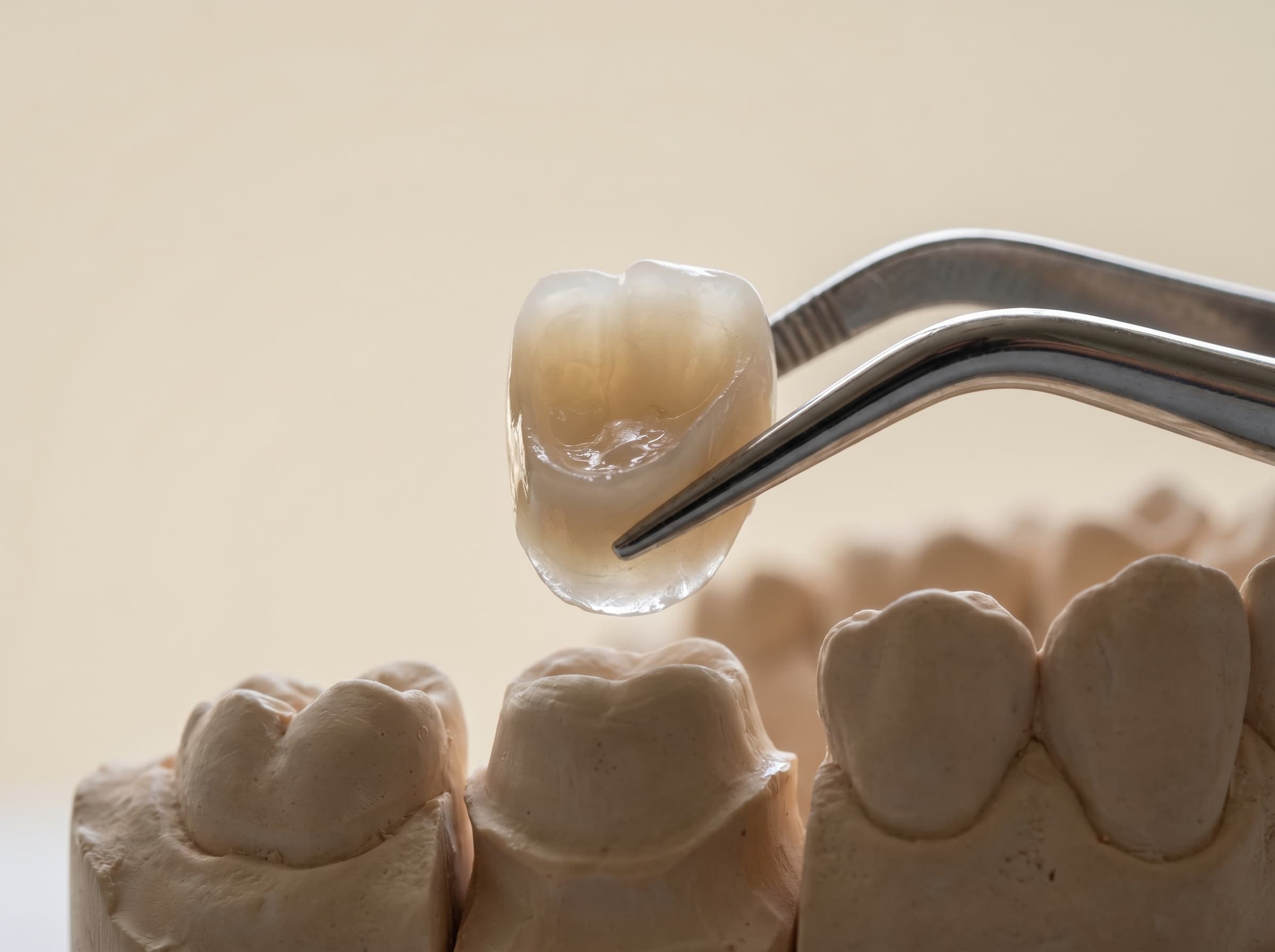
For a natural and long-lasting solution, we offer ceramic restorations, including onlays, veneers, crowns and bridges over damaged or weakened teeth. These restorations chemically bond to your teeth using a strict adhesion protocol, ensuring a perfect fit and maximum durability. Our rigorous procedures including rubber dam isolation, electric motor-controlled speed preparation, advanced curing and layering techniques, 8.0x magnification and computerized occlusal analysis with T-Scan guarantee the best results with minimal risk of complications. Whether you want to improve aesthetics or restore dental structure, we tailor our approach to your individual needs.
Why choose adhesive cementation over conventional?
There are two main types of cementation for ceramic restorations: conventional cementation and adhesive cementation.
Conventional cementation
Uses self-adhesive resin cements that do not require extensive pre-treatment of the tooth or restoration surface. This type of cementation is performed with relative isolation using retractors and cotton rolls, but does not provide the same level of chemical bond as the adhesive protocol. Although it is a faster and simpler process, its success depends on the amount of remaining tooth structure and may result in a weaker chemical bond, increasing the risk of misfit, recurrent decay or long-term complications.
Adhesive cementation (our strict protocol)
CDCRThis approach requires greater skill and time from the operator, as it involves thorough treatment of both the tooth and the restoration before material placement. It is performed under absolute isolation to prevent infiltration of saliva, blood or bacteria, ensuring a hermetic and durable chemical connection. We use adhesive resin cements that achieve a much stronger and more stable bond between the tooth and the ceramic, improving the restoration's longevity and performance. Additionally, this type of cementation provides a hermetic seal that prevents bacterial infiltration, significantly reducing the risk of inflammatory processes in the dental nerve.
Why do we choose lithium disilicate and zirconia?
The choice and handling of material for ceramic restorations is fundamental to the treatment's durability. In our clinic we can use 2 ceramic materials depending on each case's characteristics.
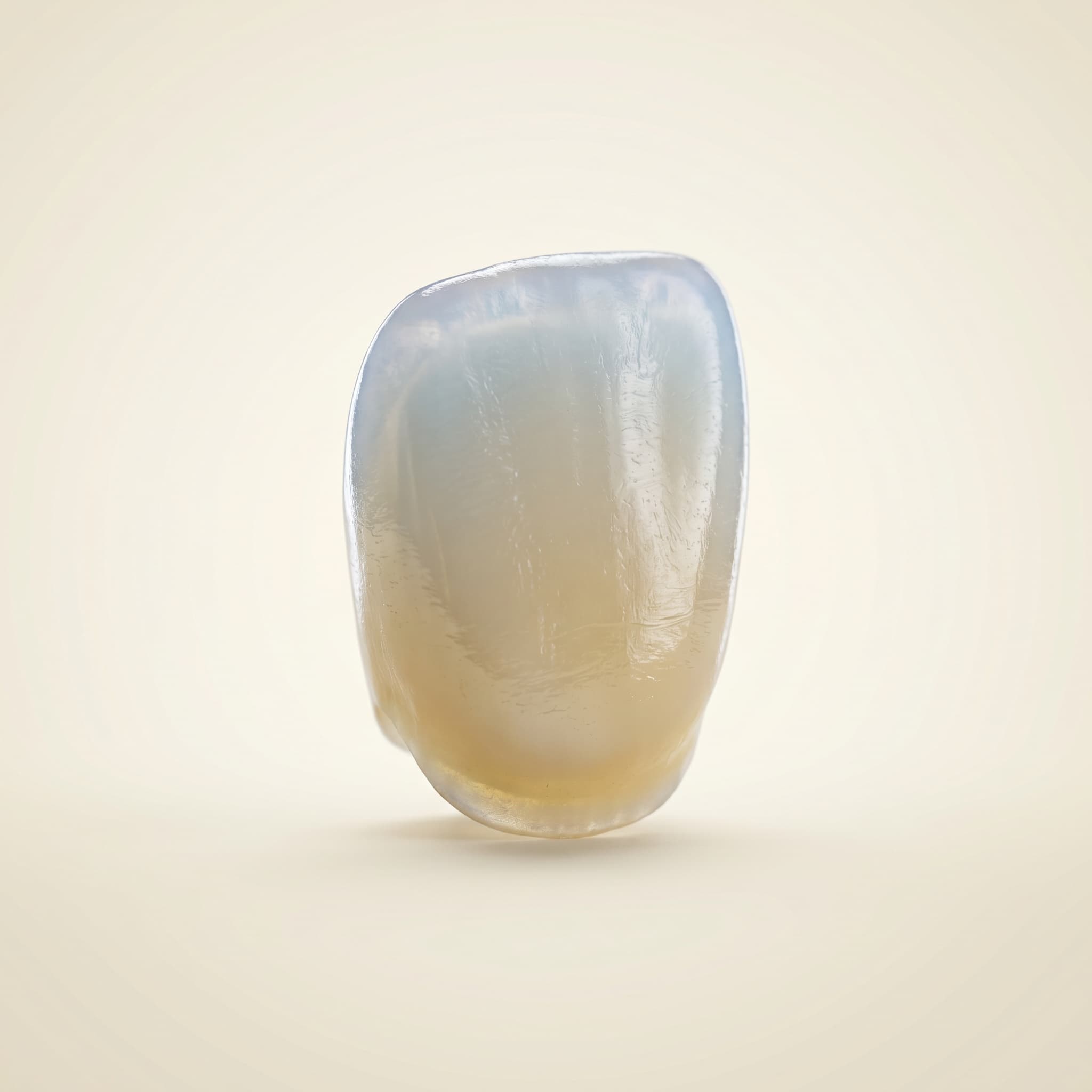
Lithium disilicate
A highly aesthetic ceramic material that offers excellent chemical bond with the tooth, ensuring stability and functionality for many years. Ideal for onlays, crowns and veneers that require a natural and resistant finish.
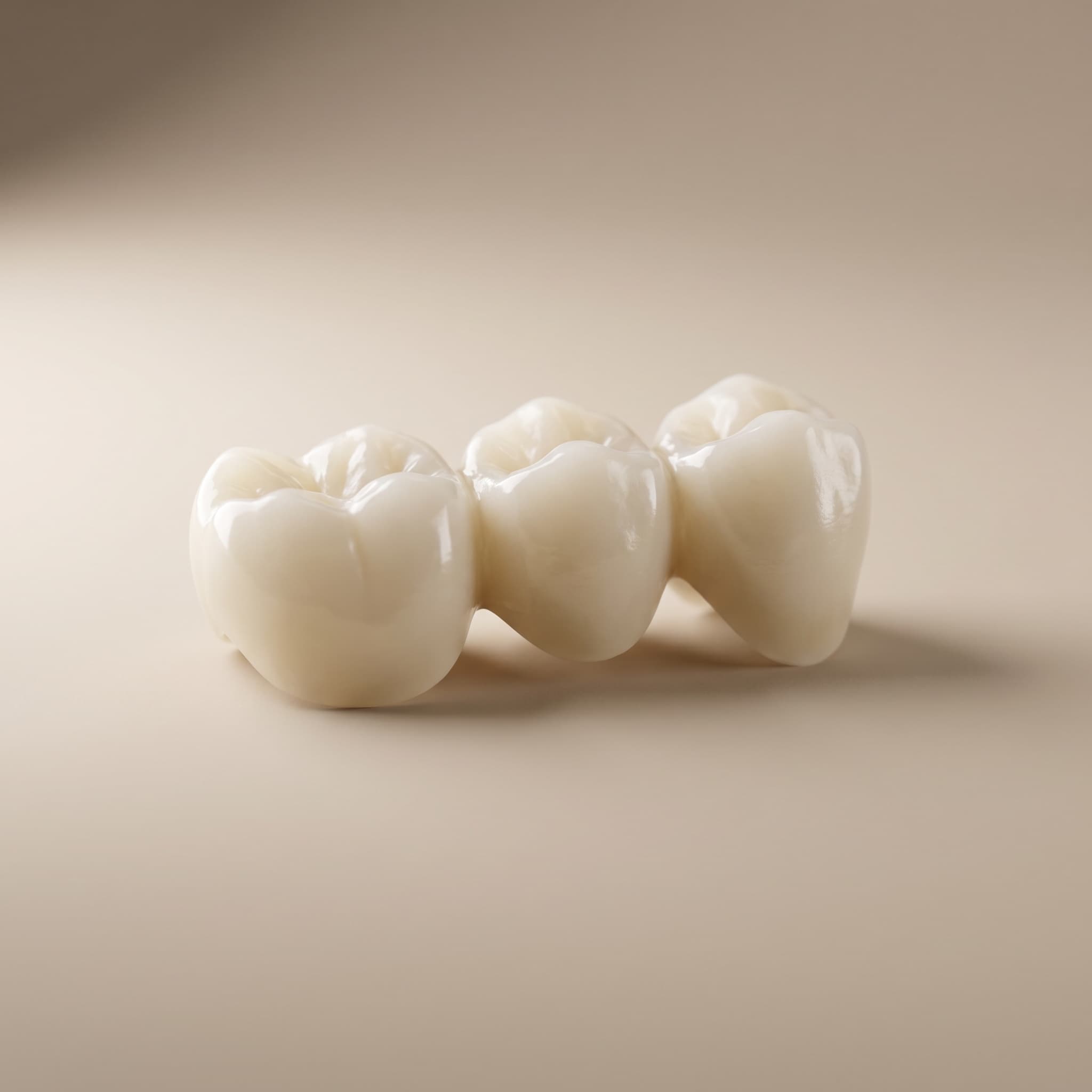
Zirconia
Extremely resistant and durable, perfect for fixed bridges over teeth. Although the chemical bond with zirconia is not as high as with lithium disilicate, when we follow our strict adhesive protocol, we achieve much better results than with conventional cementation.